Skip to content

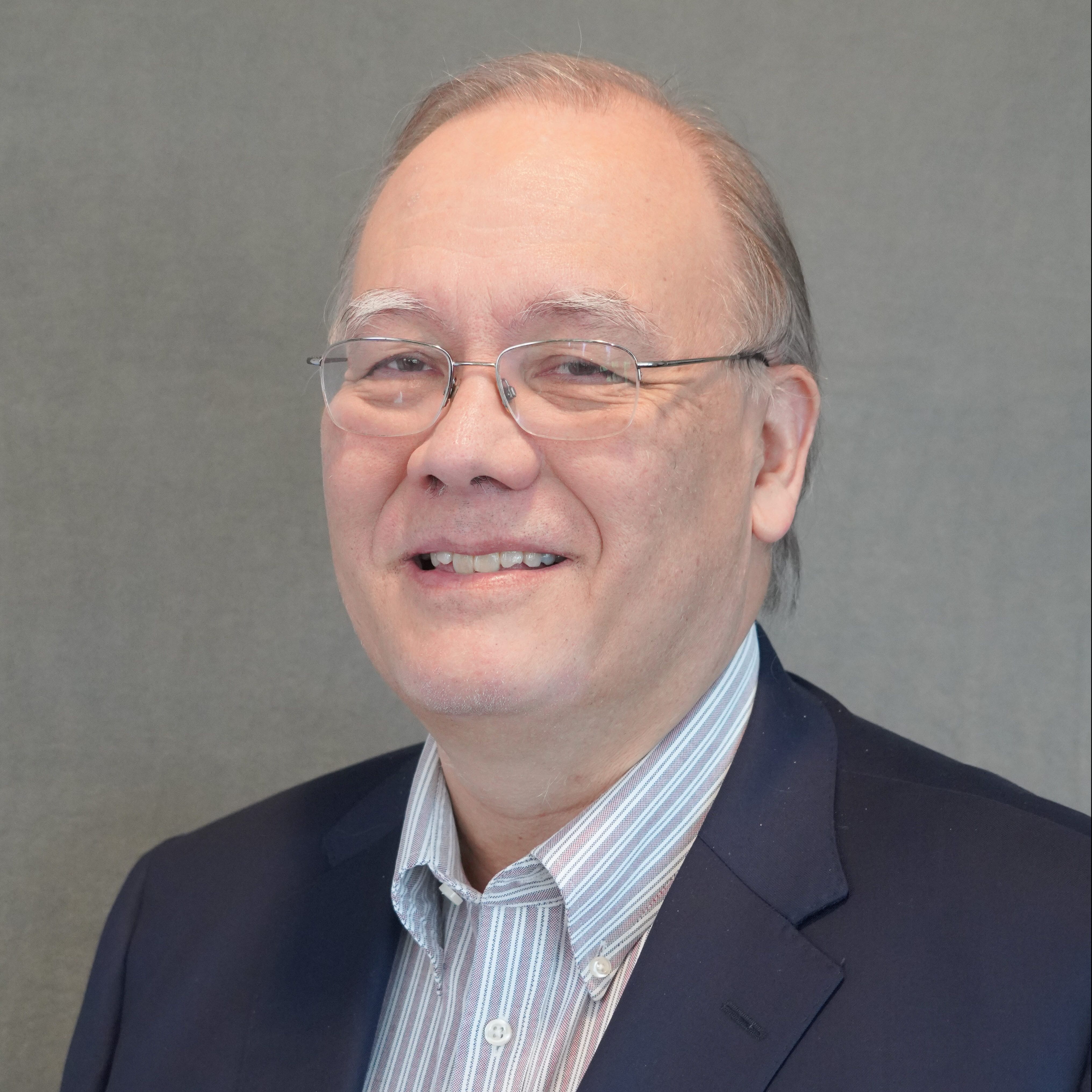
SPI Professor Pascale Ehrenfreund co-authored a briefing paper on the topic of "Space Situational Awareness and Information Sharing Principles." 

This paper was the product of the Global Future Council on the Future of Space, part of the World Economic Forum 2024.

You can find the full paper available at the following link: https://www3.weforum.org/docs/WEF_Space_Situational_Awareness_Data_and_Information_Sharing_Principles_2024.pdf

COSPAR-2024 Panel Photo

COSPAR 2024: Team Spirit in Space Research

In her role as President of the Committee on Space Research, Prof. Pascale Ehrenfreund attended the 45 th COSPAR Scientific Assembly in Busan, Korea, held from 13 to 21 July. This prestigious event brought together more than 3,000 experts and leaders from 55 countries in all major fields of space science, under the theme “Team Spirit in Space Research”. COSPAR’s biennial Scientific Assembly, actively supported by major space organizations, is a benchmark for fostering dialogue and collaboration within the global space science community. Of particular note this time was the showcasing of the newly-formed Korea Aerospace Administration (KASA), with the participation of Youngbin Yoon, Administrator of KASA, in the Opening Ceremony Roundtable. Youngbin Yoon shared his vision of the future of space activity in Korea, and the discussions on the next decade of space science programs from each agency was a highlight of the Assembly.

For the first time ever, COSPAR brought together space leaders from KASA, NASA, China National Space Administration, Agenzia Spaziale Italiana (ASI), the Indian Space Research Organisation (ISRO), the Institute of Space and Astronautical Science/Japan Aerospace Exploration Agency (ISAS/JAXA), and the UAE Space Agency. Another significant highlight of this Assembly was the introduction of COSPAR’s new community-driven Space-Weather Roadmap (https://iswat-cospar.org/). Presented by a consortium of hundreds of scientists led by COSPAR’s Panel on Space Weather, this roadmap provides key recommendations for the global space weather community. Space sustainability gained traction as a major recurring theme, underscoring our collective responsibility to ensure the long-term viability of space activities. The COSPAR Panel on Planetary Protection, a reference in upholding the 1967 Outer Space Treaty and providing accepted guidelines on planetary protection, presented the recently updated Planetary Protection Policy. COSPAR 2024 underscored COSPAR’s commitment to international regional diversity and dedication to shaping the future of the global space eco-system.
SPI Director Dr. Scott Pace and SPI Professor Dr. Henry Hertzfeld were quoted in a newly published documentary titled "Back to the Moon-Part 2".

The second instalment in a series produced by Voice of America focuses on the details of the NASA's Artemis program and plans to further explore the Moon and Mars.

You can watch the full documentary below:

SPI Director Dr. Scott Pace attended the annual meeting of the United Nations Committee on the Peaceful Uses of Outer Space in Vienna on June 19-29. Dr. Pace was part of the United States delegation to COPUOS.

You can find a full list of statements delivered by the US delegation at the following link: https://vienna.usmission.gov/the-usa-at-the-67th-session-of-the-un-committee-on-the-peaceful-uses-of-outer-space-june-2024/

SPI Director Dr. Scott Pace recently offered an interview to PwC Japan, speaking about past and current US space policies, US-Japanese relations in space, and his time at the White House.

You can access the full interview at the link below until October 31st, 2024.

https://vimeo.com/user114259289/review/957677532/56f940becb

Headshot of Professor Scott Pace

The Space Policy Institute was well represented at the 7th Prague Space Security Conference on June 16-18, 2024. At the conference participated SPI Director Scott Pace, SPI Faculty Peter Hays, SPI Non-Resident Scholars Deganit Paikowsky and Dean Cheng.

SPI at 7th Prague Space Security Conference

Maj. Staats is a recent SPI grad and is now working as an aide de camp To LTG Thomas James, deputy commander of US Space Command.

The Journal of Strategic Studies published Professor Aaron Bateman's latest article, "The Weakest Link: The Vulnerability of U.S. and Allied Information Networks in the Nuclear Age."
In this article, Professor Bateman explores the U.S. strategy for developing a resilient global information infrastructure that stretches from under the sea and into outer space to rapidly and securely move data. Lessons from this period take on new relevance as both Russia and China are developing capabilities for degrading U.S. global connectivity.